Home / Cords, hoses & portable kits
What to organize
A known hose, a readable return position. Keep the hose and its identifiers together between jobs.
Air hoses
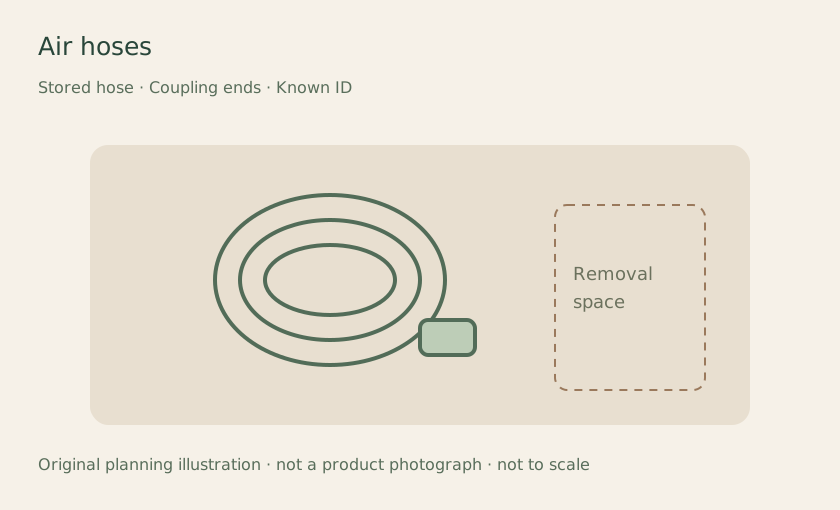
Original layout illustration · not a product photograph · not to scale. The image opens an Amazon category search, not an exact offer. Build a system you can keep using Follow the equipment and hose maker’s shutdown, disconnection and storage instructions. Keep known hose identifiers and matching supplied references accessible. Separate storage groups by the system you can identify rather than by color alone. Map these parts of the layout Stored hose Coupling ends Known ID Check the fit before filling it Include the maker-permitted stored coil, fittings and full lifting path. Check holder support, installation and load instructions with the actual group. Keep it looking put together. One readable group per known hose is calmer than overlapping loops and fittings.
Avoid: Inferring pressure rating, coupling compatibility or a universal bend radius from a storage layout.
Storage does not establish operating compatibility. Keep extension cords unplugged when not in use; replace damaged cords. These points follow CPSC’s extension-cord safety alert . Follow the selected equipment’s shutdown, disconnection and storage instructions before putting kits away.
Sources checked 2026-11-13. RIDGID’s adapter-kit page documents particular hose/accessory connections; it does not approve arbitrary search-result combinations. This library supplies storage ideas, not electrical, pressure-system, load-securement or universal accessory selection advice.
Connected organizing ideas Check the supported loop and the room to lift it.
Lift a known kit instead of collecting loose pieces.
Keep original identifiers with the small connection parts.
Editorial organization planning, not hands-on product testing or a tool/part compatibility guide. Retain original identifiers and follow the applicable product instructions.