Home / Cords, hoses & portable kits
What to organize
A recognizable position for each attachment shape. Make the attachment shape and matching system readable.
Vacuum attachments & wands
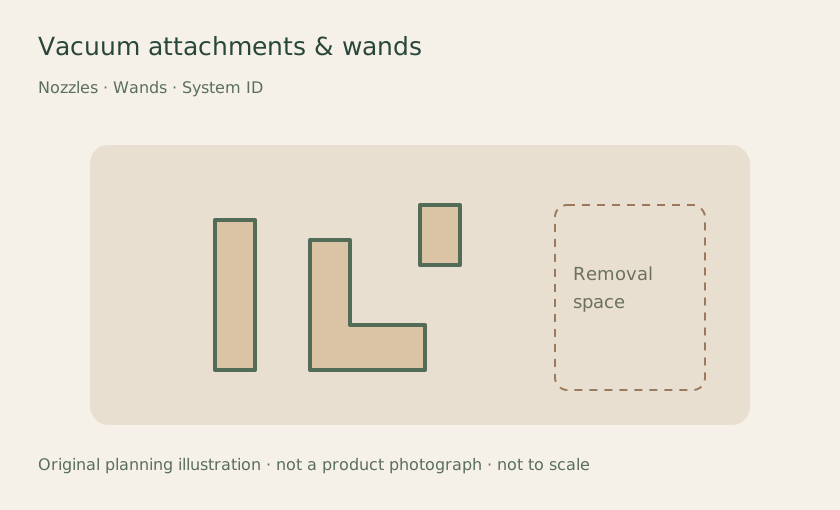
Original layout illustration · not a product photograph · not to scale. The image opens an Amazon category search, not an exact offer. Build a system you can keep using Keep known attachments grouped with the matching vacuum reference. Separate long wands from broad nozzles if their storage needs differ. Retain exact model information instead of relying only on similar connector shapes. Map these parts of the layout Check the fit before filling it Measure nozzle width, wand length and protruding clips. Check the actual storage slot or basket openings with the smallest piece. Keep it looking put together. A consistent connector direction and readable model labels make mixed shapes easier to scan.
Avoid: Turning a storage label into an adapter or compatibility recommendation.
Storage does not establish operating compatibility. Keep extension cords unplugged when not in use; replace damaged cords. These points follow CPSC’s extension-cord safety alert . Follow the selected equipment’s shutdown, disconnection and storage instructions before putting kits away.
Sources checked 2026-11-13. RIDGID’s adapter-kit page documents particular hose/accessory connections; it does not approve arbitrary search-result combinations. This library supplies storage ideas, not electrical, pressure-system, load-securement or universal accessory selection advice.
Connected organizing ideas Lift a known kit instead of collecting loose pieces.
Reserve space for the cuff as well as the loop.
Give the packed kit a readable shelf position.
Editorial organization planning, not hands-on product testing or a tool/part compatibility guide. Retain original identifiers and follow the applicable product instructions.