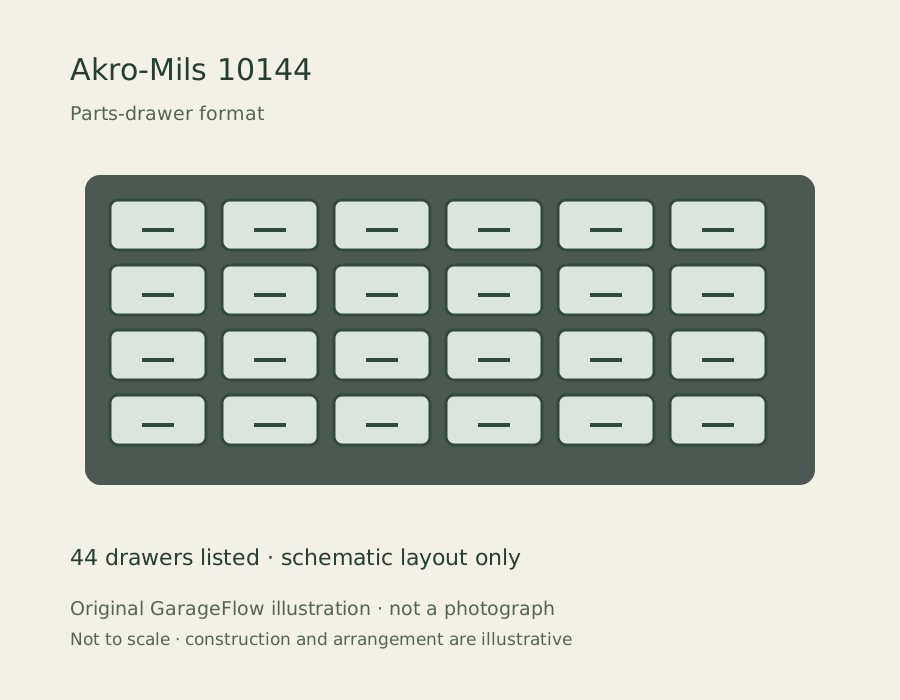
A cabinet of small drawers keeps labelled parts at a fixed station and makes individual groups accessible without opening a whole case.
Small-parts drawer cabinets
Plan drawer mix, labels and retrieval space for stationary parts storage.
Daily sizes
Bulk refills
Project kits
Example label layout · original planning illustration, not a product photograph. These labels show a sorting idea, not compatible parts or a supplied organizer configuration.
Build a system you can keep using
List the groups that need their own drawers before selecting drawer count.
Use the larger drawers for larger groups and preserve readable labels on both sizes.
Reserve space in front for pulling a drawer and reaching its back.
What belongs on the label
Drawer contents
Full size or original identifier
Refill reference
Check the fit before filling it
Compare inside drawer dimensions with the parts, not just exterior cabinet size.
Check the mounting instructions and supporting surface for the selected model.
Drawer count does not state a weight rating.
Keep it looking put together. Uniform front labels and a simple family-by-row layout help a large collection look intentional.
Avoid: Filling every drawer on day one and losing room for the next identified group.
Researched options for this approach
Product illustrations are labelled schematics. Check each brief for fit limits and primary sources.
01
For labelled hardware beside a fixed bench
Akro-Mils 10144
A stationary drawer format for separating many hardware groups. Its shallow body can suit a bench-side layout, but plan drawer withdrawal and readable labels rather than relying on the cabinet footprint alone.
Best for
Repeat access to many small labelled groups at a fixed work area
Editorial organization planning, not hands-on product testing or a tool/part compatibility guide. Retain original identifiers and follow the applicable product instructions.