Wrenches
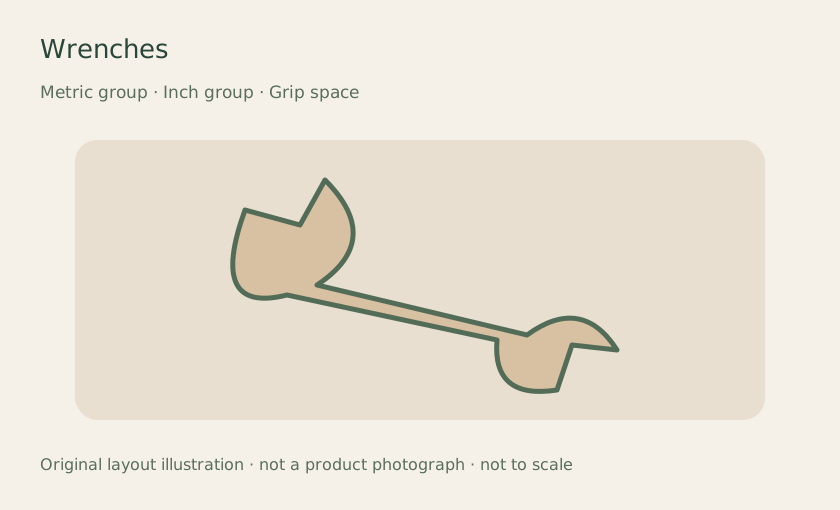
Choose wrench positions around the actual lengths, head widths and marked size groups.
Hand-tool drawers
Plan wrenches, screwdrivers, pliers and awkward hand tools around the usable drawer and loaded access.
Group the hand tools you use together. Keep useful indexed manufacturer holders intact and put duplicates in a separate lane. Record the original size systems and tool identifiers rather than relying only on handle colors.
Start with the longest wrench, broadest hammer head, projecting clamp rail and largest square. Fill the remaining space with smaller groups. A fixed equal-width grid may waste the spaces these shapes leave behind.
Record clear inside width, depth, opening height and any fittings. Include the base liner or foam and the tallest loaded rack. Check cabinet instructions and drawer load guidance separately; an organizer does not establish the cabinet rating.
Adjustable lanes can suit a changing collection. Racks make an ordered run easy to read when the actual tools fit the openings. Foam outlines define return positions but take more planning when tools are replaced. Trial paper outlines before cutting.
Try retrieving the smallest driver, shortest wrench and broadest plier handle. Add finger space where necessary. Check the full withdrawal and return path rather than only whether the tool rests inside the drawer.
Follow the selected tool, cabinet and material instructions. No general liner, foam or rack is assumed to prevent corrosion, preserve calibration, retain tools during travel or suit every contact material.
Choose wrench positions around the actual lengths, head widths and marked size groups.
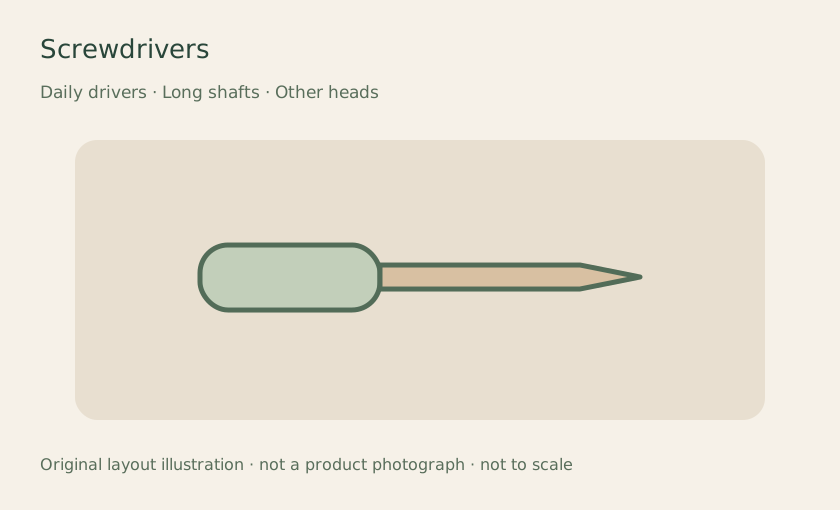
Compare racks and flat lanes around screwdriver lengths, bulky handles and readable identification.
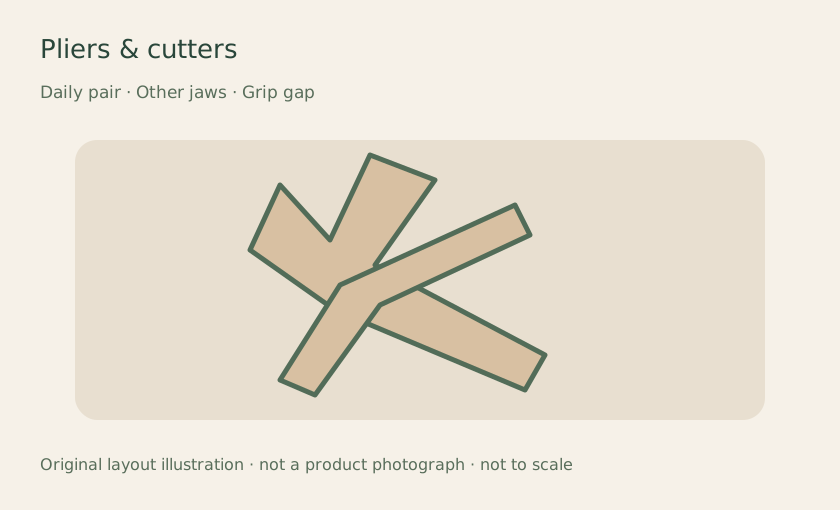
Choose flat lanes or upright racks around actual jaw and handle shapes.
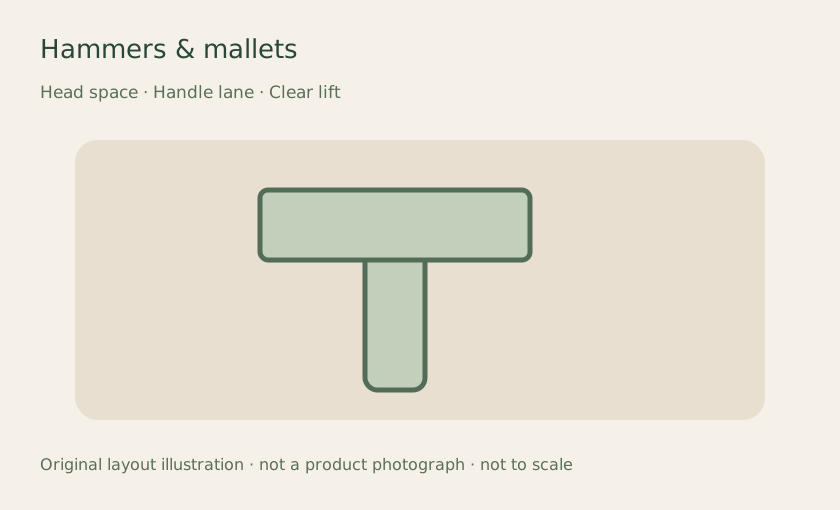
Reserve a supported position for bulky heads and long handles in a tool drawer.
Compare original indexed holders with contained lanes for loose hex keys and folding sets.
Plan storage around tape cases, long rules and broad squares without assuming protective performance.
Compare individual positions and sleeves for files and rasps using their supplied care guidance.
Plan compact clamp storage around protruding jaws, rails and the actual stored position.