Wrenches
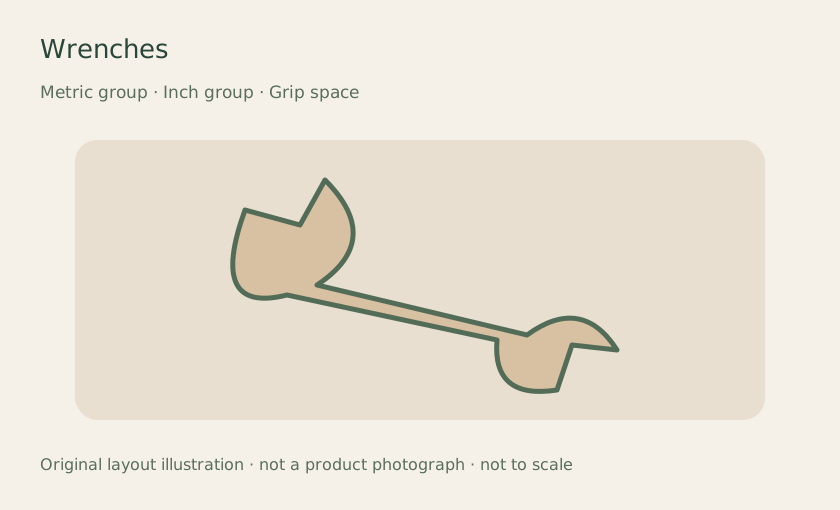
Choose wrench positions around the actual lengths, head widths and marked size groups.
Hand-tool drawers
Plan wrenches, screwdrivers, pliers and awkward hand tools around the usable drawer and loaded access.
Start with the things you already own. These original illustrations show planning ideas, not specific products, photographs or tested arrangements.
Choose wrench positions around the actual lengths, head widths and marked size groups.
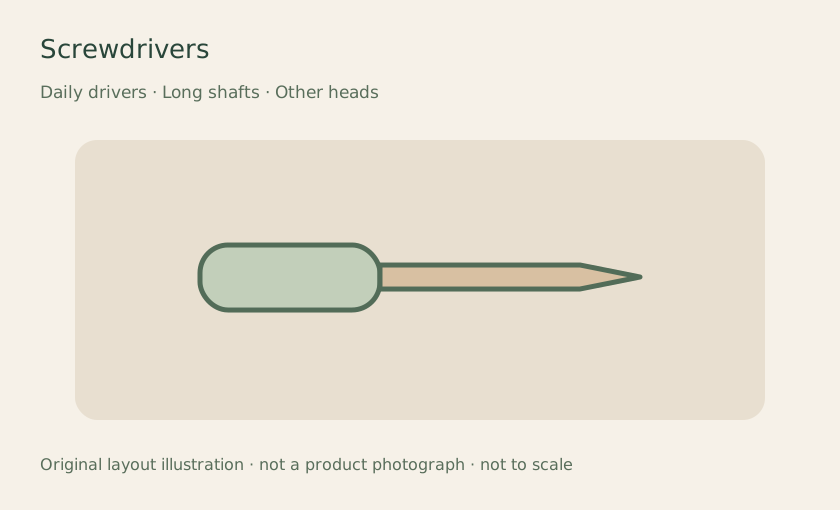
Compare racks and flat lanes around screwdriver lengths, bulky handles and readable identification.
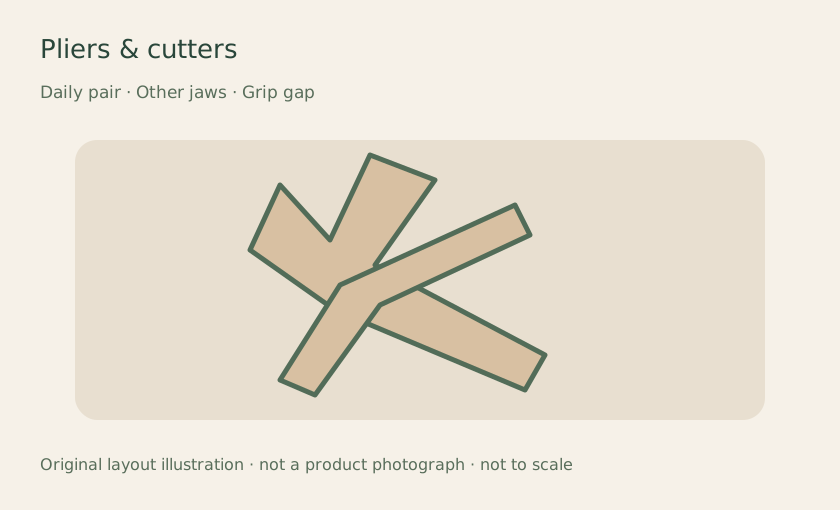
Choose flat lanes or upright racks around actual jaw and handle shapes.
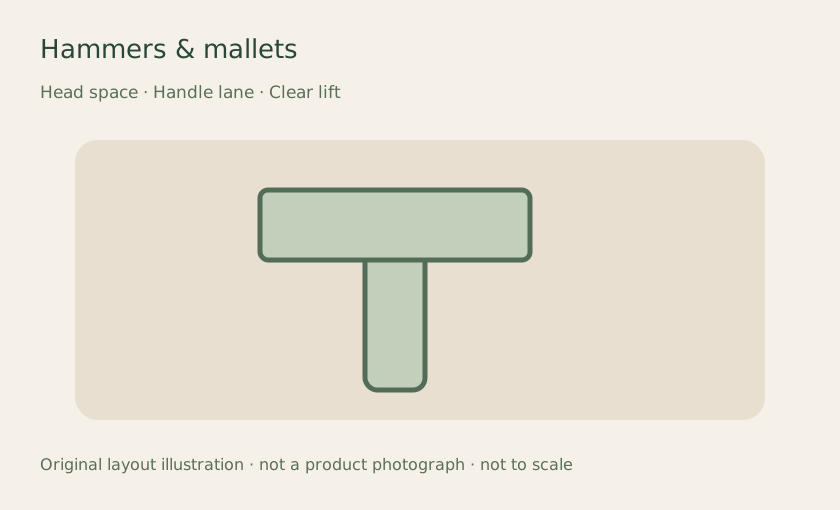
Reserve a supported position for bulky heads and long handles in a tool drawer.
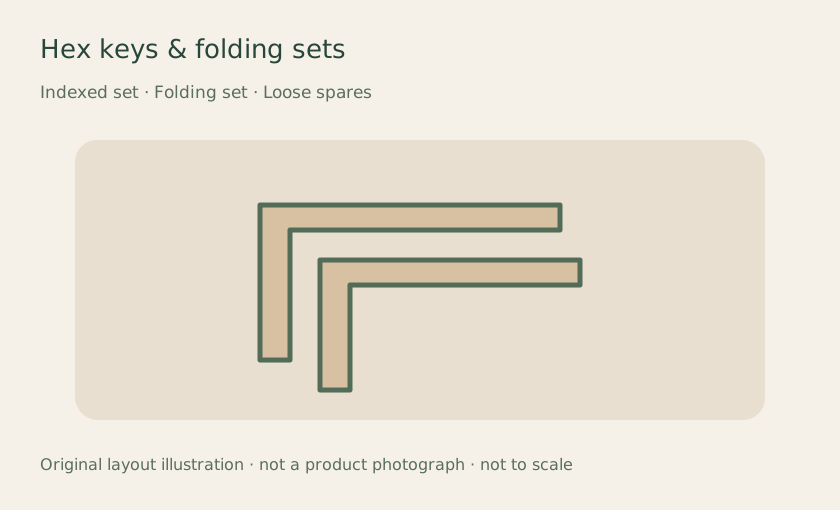
Compare original indexed holders with contained lanes for loose hex keys and folding sets.
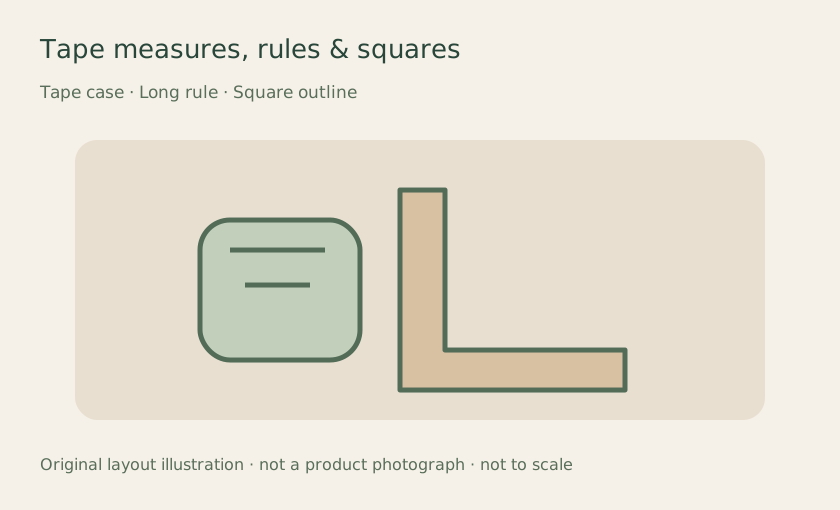
Plan storage around tape cases, long rules and broad squares without assuming protective performance.
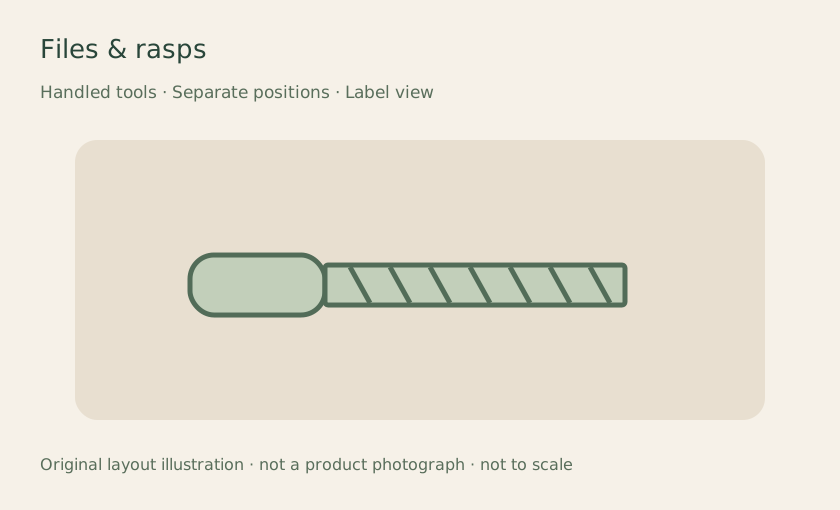
Compare individual positions and sleeves for files and rasps using their supplied care guidance.
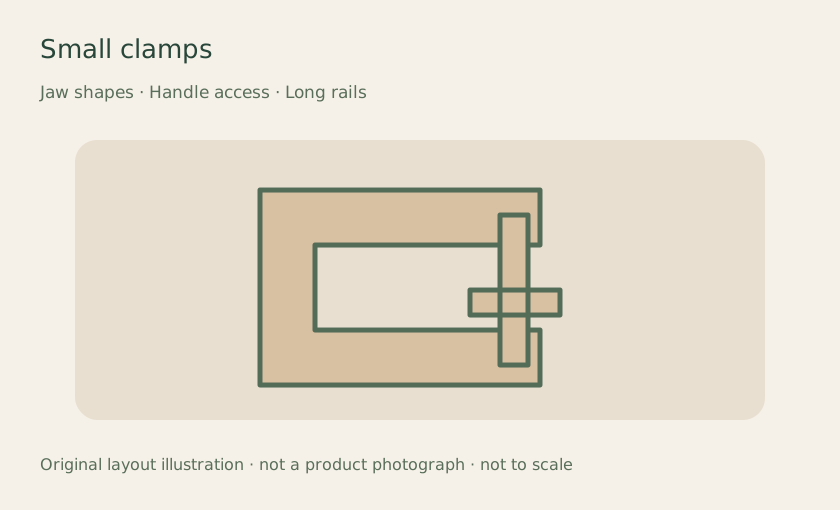
Plan compact clamp storage around protruding jaws, rails and the actual stored position.
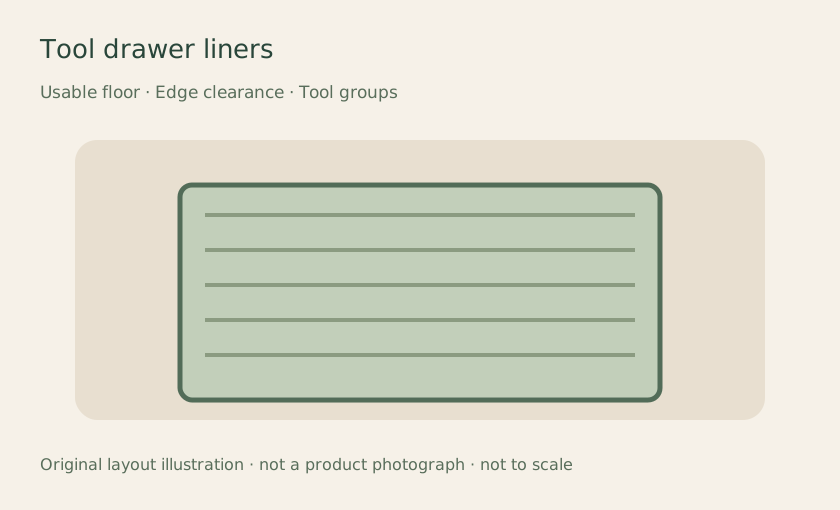
Compare liner coverage, thickness and care guidance before adding tool groups on top.
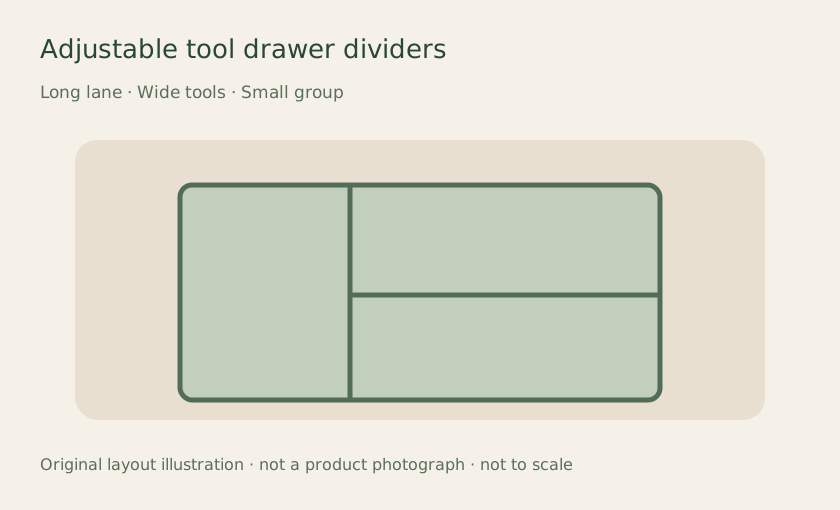
Compare adjustable boundaries with drawer geometry, small-item gaps and the return routine.
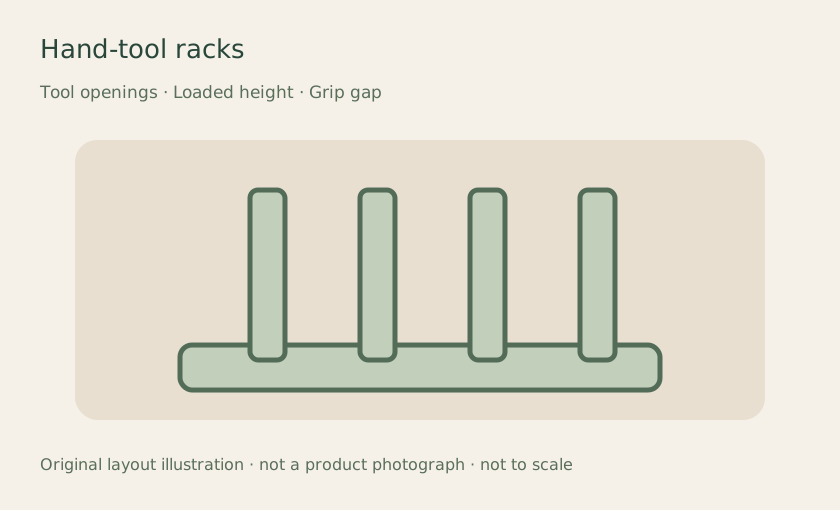
Compare indexed or upright holders around real handles, heads and available height.
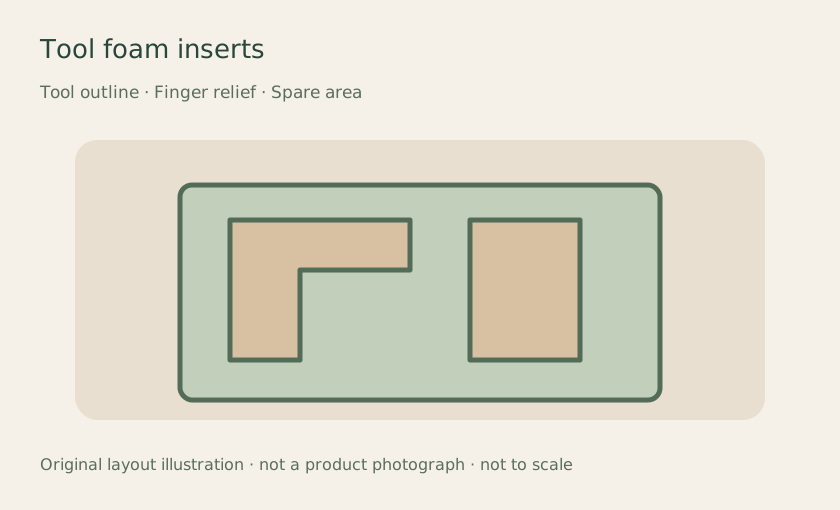
Compare custom outline positions with changing tool collections and usable drawer depth.
Lay out the widest head and longest handle first. Include liner or foam thickness, drawer fittings and room for fingers. Slot count and outside cabinet size do not prove usable fit, drawer load capacity or retention during travel.
Plan the small-parts collection beside the tools →