12 Small Garage Storage Ideas for a One-Car Garage
These small garage storage ideas start with the space your car, doors and daily routines need. Compare visible wall storage, measured shelf runs and compact task groups, then choose the ideas that fit your one-car or tight two-car garage.
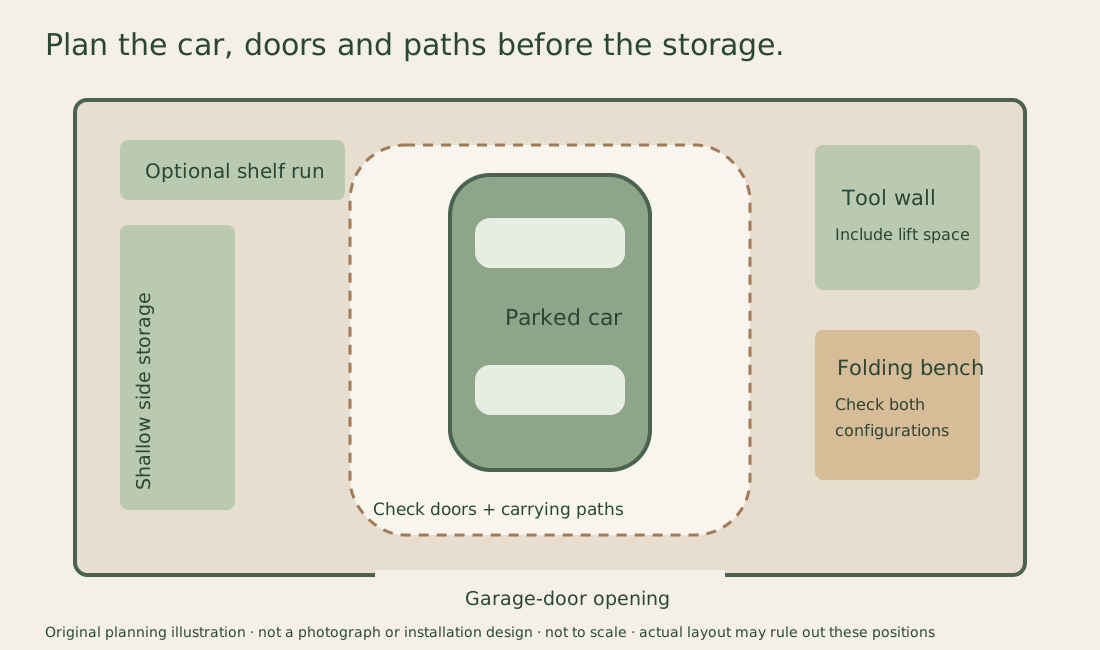
Original layout illustration · not a photograph or measured installation · not to scale. Actual clearances depend on your vehicle, doors, building and selected products.
Start with movement, then choose storage.
Park normally and mark door swings, walking routes, equipment access and the outline of a person carrying the usual gear. Keep required service clearances. Tape proposed storage footprints before buying; compare the loaded outline and the complete pickup movement.
As an Amazon Associate, GarageFlow earns from qualifying purchases. Shopping links below open tagged Amazon category searches, not verified exact offers. No live prices, stock or hands-on testing are claimed.
IDEA 01
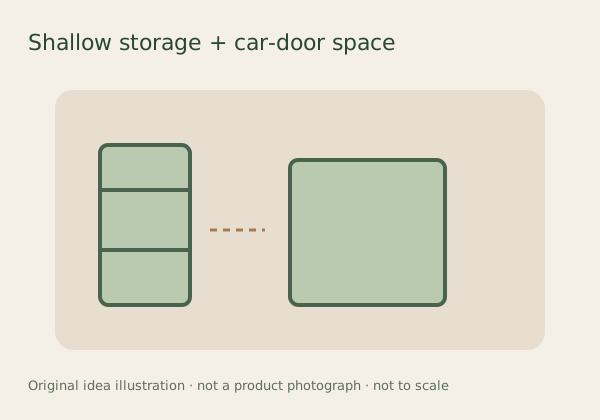
Use shallow side-wall storage where the car doors need room
When it helps: The side wall looks empty until a deep shelf blocks the way out of the car.
Park normally, open the doors you use and mark the remaining usable envelope. Choose storage depth from that space, including handles and whatever will sit on the shelf.
Check before choosing: Check the loaded outline and a person carrying the usual bag or bin. There is no universal shelf depth that fits every car and garage.
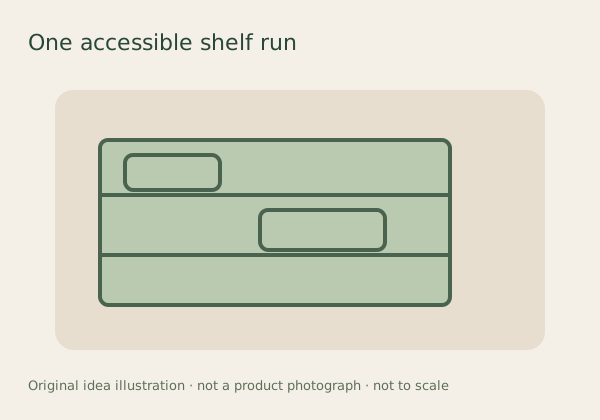
Use a back-wall shelf run only where the parked car leaves access
When it helps: A deep row of bins can fit on paper but become unreachable with the vehicle parked.
Compare one accessible shelf run with smaller groups elsewhere. Keep frequently used bins where they can be lifted out without moving the car or unloading another shelf.
Check before choosing: Include bumpers, liftgate movement, steps and service access. The back wall is an option, not automatically the best wall.
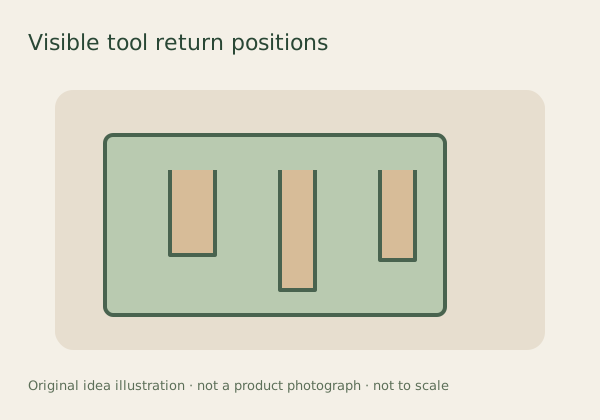
When it helps: Small tools occupy the bench because there is no obvious place to return them.
Choose a focused group of tools and map their full outlines, then compare holders documented for the selected panel or rail. Leave room to grip and lift each tool.
Check before choosing: Match system, accessory, wall, fixings and installed load instructions. Slot count does not establish tool fit.
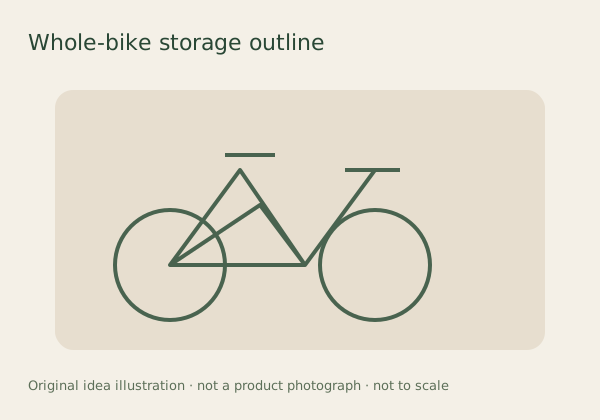
Compare a bike position using the whole loaded bike
When it helps: A bike occupies the walkway, but moving it onto a wall may still block doors or daily access.
Compare a floor stand and a wall position using wheel, handlebar, pedal and lifting outlines. Choose a setup that suits the bike and the person returning it.
Check before choosing: Follow the selected bike/holder instructions and mounting requirements. Do not assume a nominal bike count or a hook photo proves clearance.
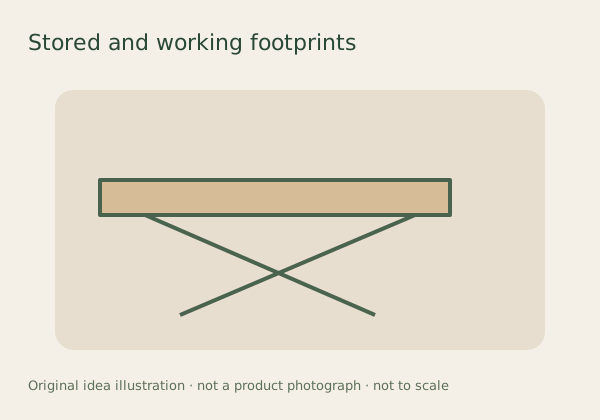
Use a folding bench when both stored and working positions fit
When it helps: A full-time bench occupies space needed for parking between projects.
Compare the folded footprint with the operating footprint, workpiece projection and the space needed to set it up. A portable folding model may suit a changing work area.
Check before choosing: Measure both configurations and follow the selected model’s operating and load instructions. A storage fit is not a usable working fit.
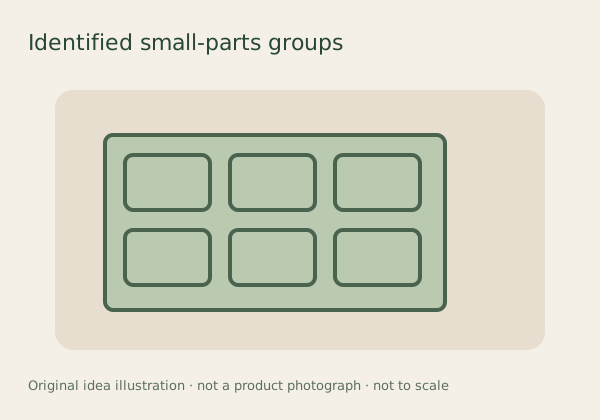
Replace loose hardware piles with a labelled parts station
When it helps: Screws, bits and fittings spread across the working surface in several mixed tubs.
Keep original identifiers with known groups. Use a small-parts drawer station or a portable cup kit based on whether the parts stay at the bench or go to the project.
Check before choosing: Measure longest and smallest parts against usable compartments, lid gaps and finger access; drawer count is not usable capacity.
When it helps: Mixed bins leave awkward gaps and require unstacking several containers to reach a daily item.
Measure the actual bay and the contents first. Repeat sizes where useful, label the face visible from the aisle and give each group a return limit.
Check before choosing: Use interior dimensions for contents and exterior dimensions for the shelf. Include lids, handles, pickup space and shelf instructions.
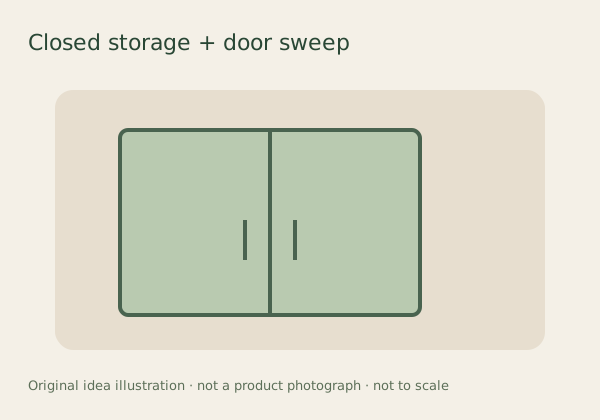
Use closed storage only where the doors and contents suit it
When it helps: A cabinet looks tidy when shut but blocks the route when opened.
Mark the door or drawer sweep before choosing a location. Keep labels readable and choose a cabinet around the actual contents and their storage requirements.
Check before choosing: Include full door opening, drawer withdrawal and permitted supporting loads. A door or ordinary lock is not a universal safety or environmental guarantee.
Treat high and overhead storage as an optional final zone
When it helps: The garage has height available, but reaching it may create more conflicts than it solves.
Keep daily groups within practical reach. Consider overhead storage only after checking the selected rack, structure, loaded contents and all moving clearances.
Check before choosing: Map the full garage-door travel, opener, lights, vehicle and retrieval route. Do not use a universal clearance number or infer capacity from floor area.
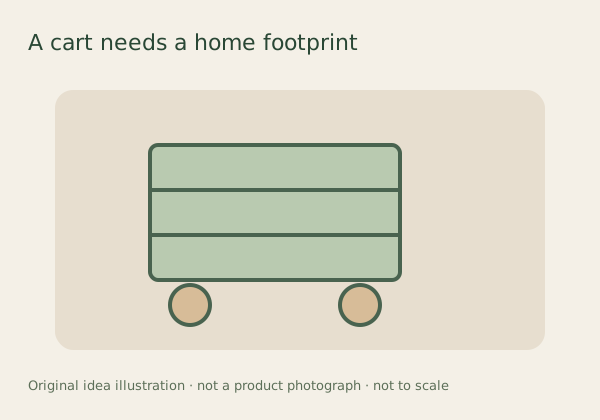
When it helps: A cart clears the bench temporarily but has nowhere to go when the car returns.
Choose a home footprint and compare the loaded cart in its parked and working positions. Keep only the task group that benefits from moving together.
Check before choosing: Include handle and caster projection, drawer travel, surface conditions and the selected cart’s instructions. Moving clutter is not the same as storing it.
Small one-car garage storage ideas: where to start
How do you organize a small garage and still park the car?
Use the actual parked vehicle and open doors to define the storage envelope. Start with one accessible daily-use group, trial the loaded storage depth and test the route back to its home. Add another zone only when the first still leaves the movement space you need.
What can I improve before buying organizers?
Group known items, retain identifying labels, move things to the room where they are actually used and mark a return position for each remaining kit. Reuse a suitable shelf or container before adding another format. Follow contents’ care and storage directions.
Are walls always better than shelves in a small garage?
No. Shaped tools may suit documented wall holders; boxed supplies may suit a usable shelf bay. Compare full loaded depth, support requirements and retrieval. Neither format earns space simply because it is described as vertical.
Does every small garage have room for overhead storage?
No. The structure, door mechanism, vehicle, services, selected rack and retrieval space can rule it out. Use the selected instructions and qualified installation advice where needed, rather than assuming a standard ceiling height or a fixed gap is enough.
Turn the ideas into one reviewable plan
Map the vehicle, doors, paths and required access.
Choose the daily group causing the most friction.
Measure the contents and trial the loaded storage outline.
Check the selected product and supporting-system instructions.
Try returning the group before expanding the layout.